Ocala Insurance

Insurance in Ocala

Call Today: (352) 732-7105

  • Request a Certificate
  • Personal Insurance
    • Homeowners Insurance
    • Car Insurance
    • Umbrella Insurance
    • Flood Insurance
  • Business Insurance
  • Farm Insurance
  • About Us
  • Payments
  • Claims
  • Contact Us

Insurance as a Career

February 11, 2024 By cary

Insurance CareerCourtesy of iii.org

There are more than a half-million professionals employed within the U.S. property/casualty insurance market. And, if you ask many of them how they got into the industry, most will call it a lucky break. My such stroke of luck occurred decades ago. I was working for a real estate developer, the housing market took a(nother) crash, so I needed to find work. A survey of the marketplace introduced the tremendous opportunities in the insurance field and brought me a wonderful, rewarding career. I highly recommend it!

The insurance field brings a meaningful job. This is an industry that helps protect people and their finances. Insurance makes things happen. You need it to drive a car, build a home (or rebuild one after a disaster), to leave loved ones financially secure, to borrow money to build a business – and so on. Check out InsureMyPath for insight into the profession and a review of the types of career roles.

For a student considering a college curriculum, there are universities with a risk management and insurance curriculum throughout the U.S. Among them is the insurance program at Florida State University.

What do young professionals think of the insurance field? The view themselves as “secret saviors” because they help people rebuild after disaster. There are a lot of jobs, and room for self-development and advancement. Join us!

Filed Under: Insurance, Insurance News

Auto Insurance Myths

February 4, 2024 By cary

Insurance MythsCourtesy of iii.org

When purchasing an auto policy, it’s important to understand the factors that affect your policy costs and coverage. Unfortunately, there’s a lot of bad information that passes for “common wisdom”—here, we separate myth from facts about car insurance.


Myth 1 – Color determines the price of auto insurance

It doesn’t matter whether your car is “Arrest Me Red” or “Hide In Plain Sight White”—the color doesn’t actually factor into your auto insurance costs. The price of your auto policy is based on many factors, such as car make, model, body type, engine size and the age of the vehicle, as well as the car’s sticker price, the cost to repair it, its overall safety record and the likelihood of theft. Insurers also take into account the age, driving record and sometimes the credit history of the driver.

Myth 2 – It costs more to insure your car when you get older

Quite the opposite, in fact—older drivers may be eligible for special discounts. For example, those over 55 years of age can get a reduction in their auto insurance premium if they successfully complete an accident prevention course (available through local and state agencies as well as through the AAA and AARP). Retirees or those who aren’t employed full time—and therefore, who are driving less—may also be eligible for a car insurance discount. Older driver programs and discounts vary by state and insurance carrier and driver age, so if you think you may qualify, check with your insurance professional.

Myth 3 – Your credit has no effect on your insurance rate

Your credit-based insurance score—which is derived from your credit history—may matter. A good credit score demonstrates how well you manage your financial affairs and has been shown to be a good predictor of whether someone is more likely to file an insurance claim so many insurance companies take it into consideration when you want to purchase, change or renew your auto insurance coverage. People with good credit—and, therefore good insurance scores—often end up paying less for insurance.

Myth 4 – Your insurance will cover you if your car is stolen, vandalized or damaged by falling tree limbs, hail, flood or fire

This is only true if you opt for comprehensive and collision coverage along with your standard policy. If a car is worth less than $1,000, or less than 10 times the insurance premium, purchasing these coverages may not be cost effective—but you do need to have collision and comprehensive insurance to fully protect your vehicle from all types of damage.

Myth 5 – You only need the minimum amount of auto liability insurance required by law

Almost every state requires you to buy a minimum amount of auto liability coverage but buying only the minimum amount of liability means you are likely to pay more out-of-pocket for losses incurred after an accident—and those costs may be steep. The insurance industry and consumer groups generally recommend a minimum of $100,000 of bodily injury protection per person and $300,000 per accident. If you have substantial personal financial assets to protect in the event of a lawsuit, you may even want to consider an umbrella liability policy.

Myth 6 – If another person drives your car, in the event of accident, his or her auto insurance will cover the damages

In most states, the auto insurance policy covering the vehicle is considered the primary insurance. This means that the car owner’s insurance company must pay for damages caused by an accident, regardless of who is driving. Policies and laws differ by state, so make sure you understand the rules before allowing another person to drive your car.

Myth 7 – Soldiers pay more for insurance than civilians

If you are in the military—regardless of which branch—you actually qualify for a discount on auto insurance. You’ll need to supply documentation that lists your name, rank and the time that you will be enlisted in the service (in some situations, you might be able to have your commanding officer make a phone call on your behalf). Shop around—some auto insurance companies provide discounts for former members of the military, as well as their families.

<
Myth 8 – Personal auto insurance also covers business use of your car

If you are self-employed and use your vehicle for business purposes, personal auto insurance may not protect you so it’s important to purchase business vehicle insurance. If you have other people—such as employees—using your vehicle, regularly check their driving records.


Filed Under: Insurance, Insurance News

Disasters & homeowners insurance

January 28, 2024 By cary

Disaster InsuranceCourtesy of iii.org

Standard homeowners policies cover a wide range of potential disasters, from tornadoes to lightning strikes to winter storm damage. Policies do vary, though, so for your own peace of mind, check yours for the specific perils covered. Learn what’s generally covered by each homeowners insurance policy type—and what’s not.
What type of disasters are covered?
You will want to determine what type of coverage you have for:

  • Dwelling
  • Personal property

Options include:

  • Perils Basic HO-1*+
  • Broad HO-2*
  • Special HO-3*
  • Special HO-3
  • Renters HO-4
  • Condo/Co-op HO-6
  • Modified Coverage HO-8

Disasters that are not covered

  1. Floods. Flood damage is excluded under standard homeowners and renters insurance policies. Separate flood insurance coverage, however, is available for both homeowners and renters as a separate policy both from the National Flood Insurance Program (NFIP) and from a few private insurers. Learn more about flood insurance—whether you need it, how to get it, and more.
  2. Earthquakes. Earthquake coverage is available from most insurance companies as a separate policy or an endorsement to your homeowners or renters policy. Learn more about earthquake insurance.
  3. Maintenance damage. It is your responsibility to maintain your home and take reasonable precautions to protect your home from damage. Your insurance policy will not cover damage due to lack of maintenance, mold or infestation from termites or other pests.
  4. Sewer Backup. Sewer backups are not covered under a typical homeowners insurance policy, nor are they covered by flood insurance. This type of coverage must be purchased either as a separate product or as an endorsement to a homeowners policy, usually at a nominal cost. Learn more about sewers and sewer backup insurance.


Next steps: Need to settle a claim after a disaster? We’re sorry—but maybe these tips will make the claims process easier for you.

Filed Under: Insurance, Insurance News

Are You Covered in the Case of a Natural Disaster?

September 24, 2023 By cary

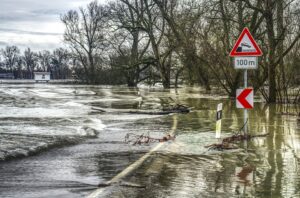
Flood Insurance Courtesy of iii.org.

Homeowners and businesses in California’s Butte, Sutter and Yuba counties who have flood insurance will be covered if the Lake Oroville Dam’s auxiliary spillway fails, according to the Insurance Information Institute (I.I.I.). Revised forecasts call for about 10 inches of rain heading to the area according to the LA Times.

Roughly 50,047 single- and multi-family residential homes could be damaged with an estimated reconstruction cost value of $13.3 billion if the Oroville Dam in California were to fail completely, according to new data analysis from CoreLogic that included the six primary counties in that area.

“The potential for flooding poses a significant threat to life and property in these northern California counties and forced the evacuation of almost 200,000 of residents,” said Janet Ruiz, the I.I.I.’s California Representative. “Standard homeowners, renters and business insurance policies do not cover flood-caused damage. A separate flood insurance policy is needed.” Lake Oroville Dam is in Butte County.

Flood insurance is available from FEMA’s National Flood Insurance Program (NFIP) and a few private insurance companies. NFIP policies have a 30-day waiting period before the coverage is activated. Excess flood insurance policies are also available from some private insurers if additional coverage is needed above and beyond the basic FEMA NFIP policy. To learn more about flood insurance, visit the FloodSmart.gov.

If your home or business is near a river, lake, stream, creek, dam or other body of water, the I.I.I. recommends taking these three steps in order to assess your property’s flood risks.

  • Contact your insurance professional. Take the time to ask questions and be sure you understand all of your insurance options. It will help you make informed decisions about your insurance coverage.
  • Prepare an emergency plan. The I.I.I.’s free mobile app, Know Your Plan, makes it easy to be ready when disaster strikes. Preparedness information is also available from FEMA’s Ready.gov and the National Oceanic and Atmospheric Administration’s (NOAA) Weather Ready Nation.
  • Conduct a home inventory. Documenting your belongings will help you buy the right amount, and type, of insurance. A home inventory also makes claim filing easier and can be used to document financial losses when filing tax returns or applying for post-disaster financial assistance. Using the I.I.I.’s Know Your Stuff app will ensure you have an updated home inventory, accessible anywhere, any time.

Filed Under: Insurance

What Happens if Your Car Insurance is Cancelled?

May 22, 2023 By cary

Car InsuranceCourtesy of iii.org

There’s a difference between an insurance company cancelling a policy and choosing not to renew it. Learn why your insurance might not be renewed

Auto insurance cancellation

Insurance companies cannot cancel a policy that has been in force for more than 60 days except when:

  • You fail to pay the premium
  • You have committed fraud or made serious misrepresentations on your application
  • Your drivers license has been revoked or suspended.

Auto insurance non-renewal

Either you or your insurance company can decide not to renew the policy when it expires. Your insurance company must give you a certain number of days notice and explain the reason for not renewing before it drops your policy (the exact timeframes and rules will depend on the state in which you live).

There are a number of reasons an insurance company may choose not to renew a policy, and it may have nothing to do with you personally. For example, your insurer may have decided to drop that particular type of insurance or to write fewer policies where you live.

However, a nonrenewal can also be due to your record or your actions. Doing something to considerably raise the insurance company’s risk—like driving drunk—would be cause for non-renewal.

If you’ve been told your policy is not being renewed and you want a further explanation or think the reason is unfair, call the insurance company’s consumer affairs division. If you don’t get a satisfactory explanation, contact your state insurance department.

Note that nonrenewal at one insurer doesn’t necessarily mean you’ll be charged a higher premium at another insurance company.

Filed Under: Insurance

  • « Previous Page
  • 1
  • …
  • 18
  • 19
  • 20
  • 21
  • 22
  • …
  • 34
  • Next Page »

The Griffin Insurance Agency
2139 NE 2nd Street
Ocala, FL 34470

Phone: (352) 732-7105
Fax: (352) 732-9705
Hours: Monday-Friday: 9-5

Accessibility Statement

  • Request a Certificate
  • Payments
  • Claims
  • Insurance Blog
  • Contact Us
  • Home
  • Privacy Policy

Copyright Grffin Insurance Agency 2015 · designed by iWebResults